Why shouldn't driveway anti-slip solutions be judged solely on "anti-slip coefficient"?
Driveway ramps have different usage conditions compared to general stairs and pedestrian floors. In addition to surface anti-slip performance, factors such as vehicle braking, acceleration, turning, gradients, rainwater, water accumulation, and long-term tire abrasion and wear must also be considered.
Therefore, when selecting driveway anti-slip materials, one should not solely compare which material is "roughest" or "most slip-resistant." Instead, simultaneous evaluation should include:
Installation Method
Driveway closure time
Material fixing methods
Wear resistance conditions
Existing floor conditions
Partial or full-surface installation requirements
Subsequent cleaning
Maintenance and Repair Methods
Especially for existing driveway ramps, if only specific slope sections, braking areas, or turning areas require improvement, the scope of construction itself is also an important condition for material selection.
I. What are the common materials for driveway anti-slip solutions?
1. Stair nosing coatings / Invisible anti-slip agents / Etching treatments
Invisible anti-slip treatments, etching, and some surface treatment methods are characterized by fast construction and better preservation of the original floor appearance, making them commonly used for existing floor improvements.
However, the actual anti-slip effect and duration of effectiveness are influenced by the substrate, traffic volume, tire wear, cleaning methods, and environmental conditions. Some products also require regular cleaning or maintenance to sustain their anti-slip properties.
Therefore, if applied to areas that are continuously exposed to vehicle traffic, such as driveway ramps and ramps, in addition to initial installation time, also compare:
Methods for maintaining anti-slip effectiveness, subsequent cleaning and maintenance requirements, treatment after wear, whether re-application is necessary, and whether the driveway ramp needs to be re-closed during re-application.
Suitable for: pedestrian areas, large-scale existing floor improvement; driveways and ramps should be evaluated individually based on traffic flow, wear, substrate, and maintenance conditions.
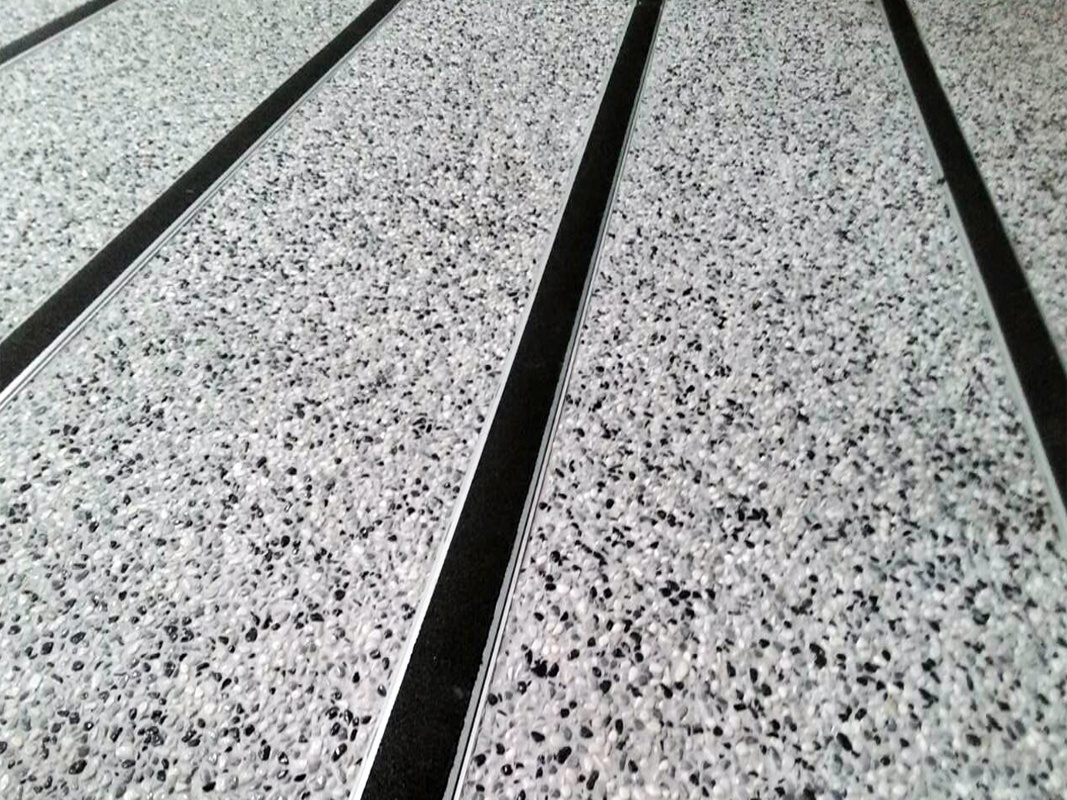
2. Aggregate Type Anti-Slip Material (Epoxy)
By incorporating anti-slip aggregates such as Silicon Carbide (Carborundum), quartz sand, etc., into floor coatings or overlay systems, the surface roughness is increased. The actual effectiveness is related to the aggregate, the application system, the fixing method, and the quality of workmanship.
Suitable for: driveway ramps and areas requiring increased surface roughness.
3. Anti-slip tiles / anti-slip flooring
Utilizing flooring materials with anti-slip surfaces or textures to provide slip resistance, more suitable for new installations or flooring projects that can be redone.
Suitable for: new driveways, regraded ramp flooring, and anti-slip tiles that require professional selection, as choosing incorrectly can lead to greater slipperiness than having no treatment.
4. Self-adhesive anti-slip materials
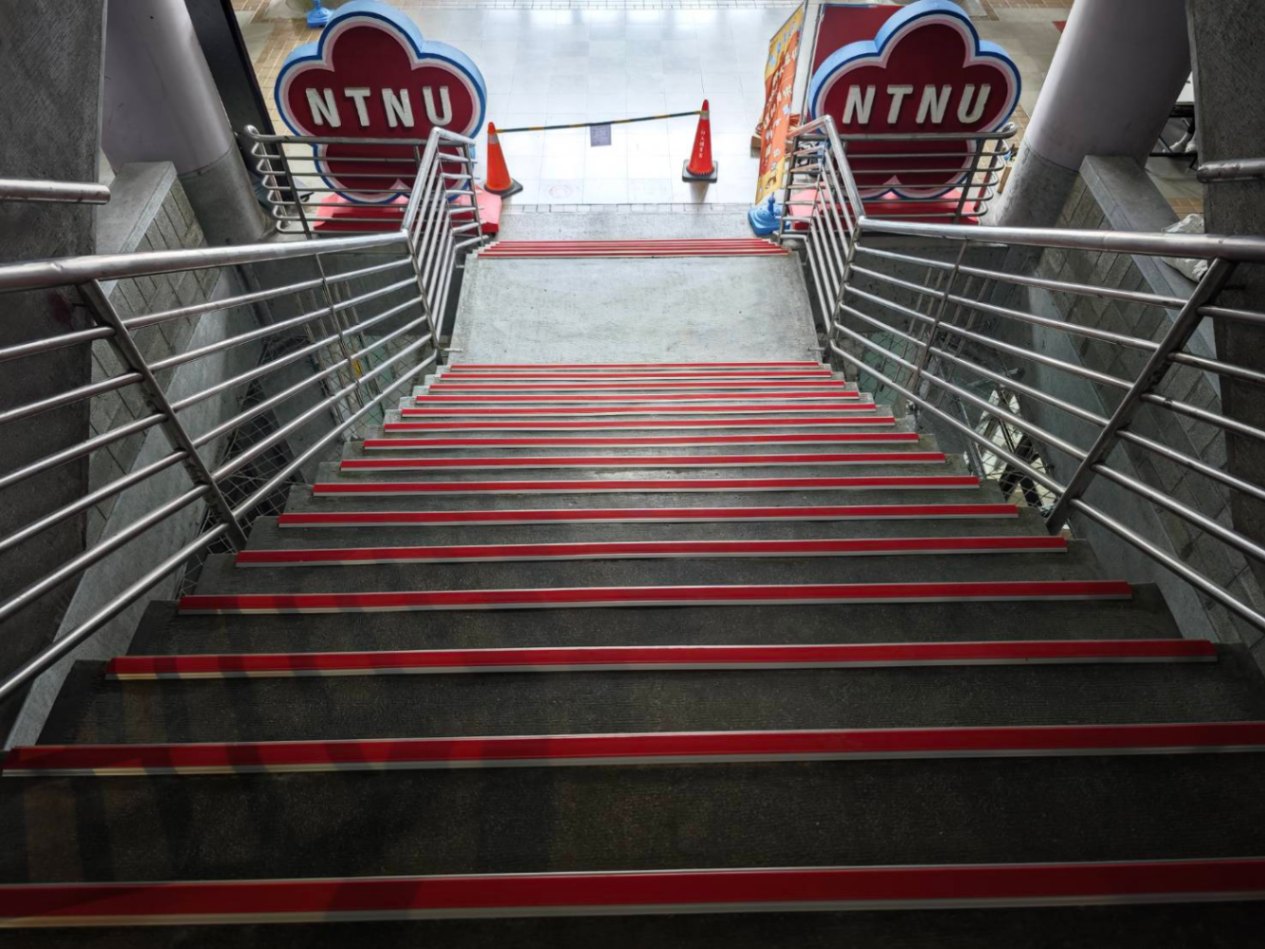
Can be used on stairs or in localized areas. However, driveways are subjected to forces from tire pressure, braking, and steering. Therefore, if applied to driveways, adhesion, wear resistance, and long-term usage conditions should be separately evaluated.
Suitable for pedestrian areas, stairs, and specific localized improvements; use on driveways requires evaluation based on site conditions.
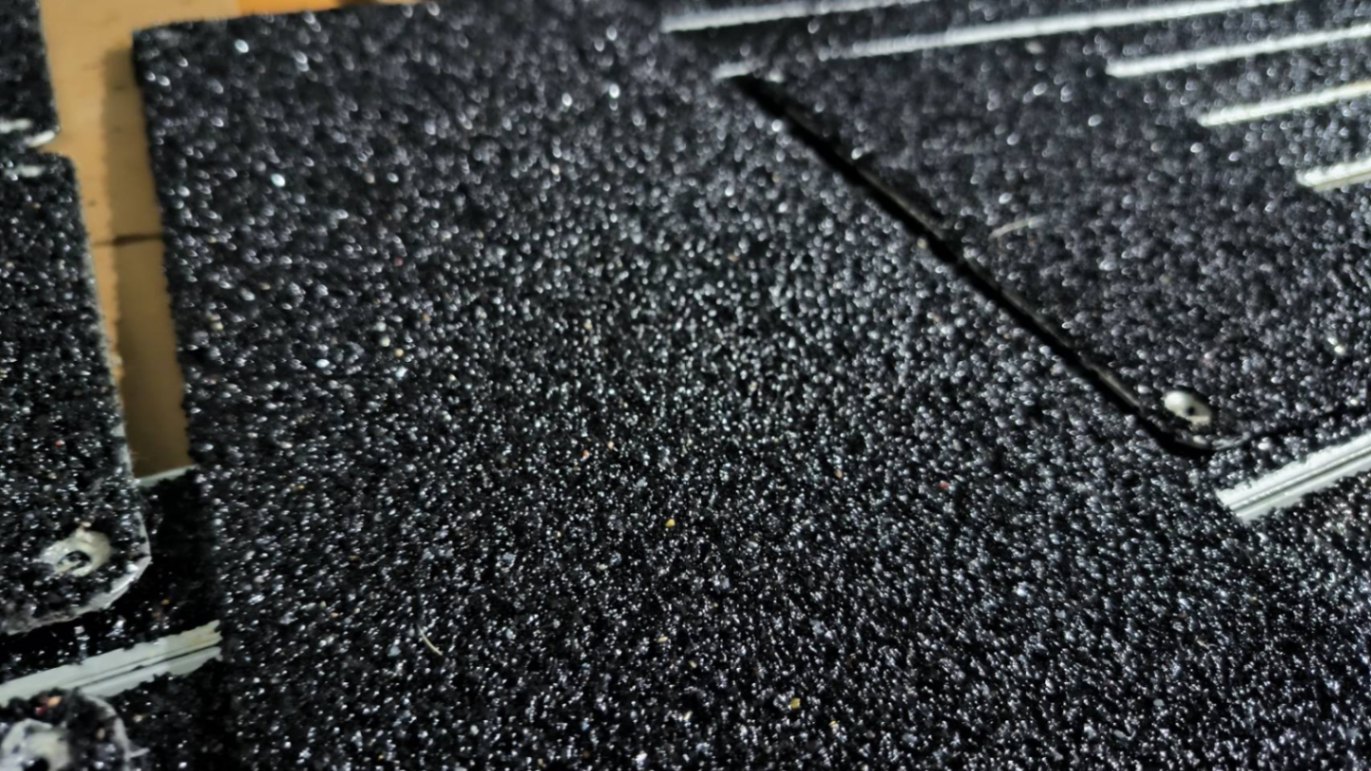
5. Reinforced Silicon Carbide Anti-Slip Plate for Driveway Ramps
Utilizing Silicon Carbide (Carborundum) to create a coarse anti-slip tread, it can be applied to areas such as stairs, ramps, and driveway ramps according to project requirements.
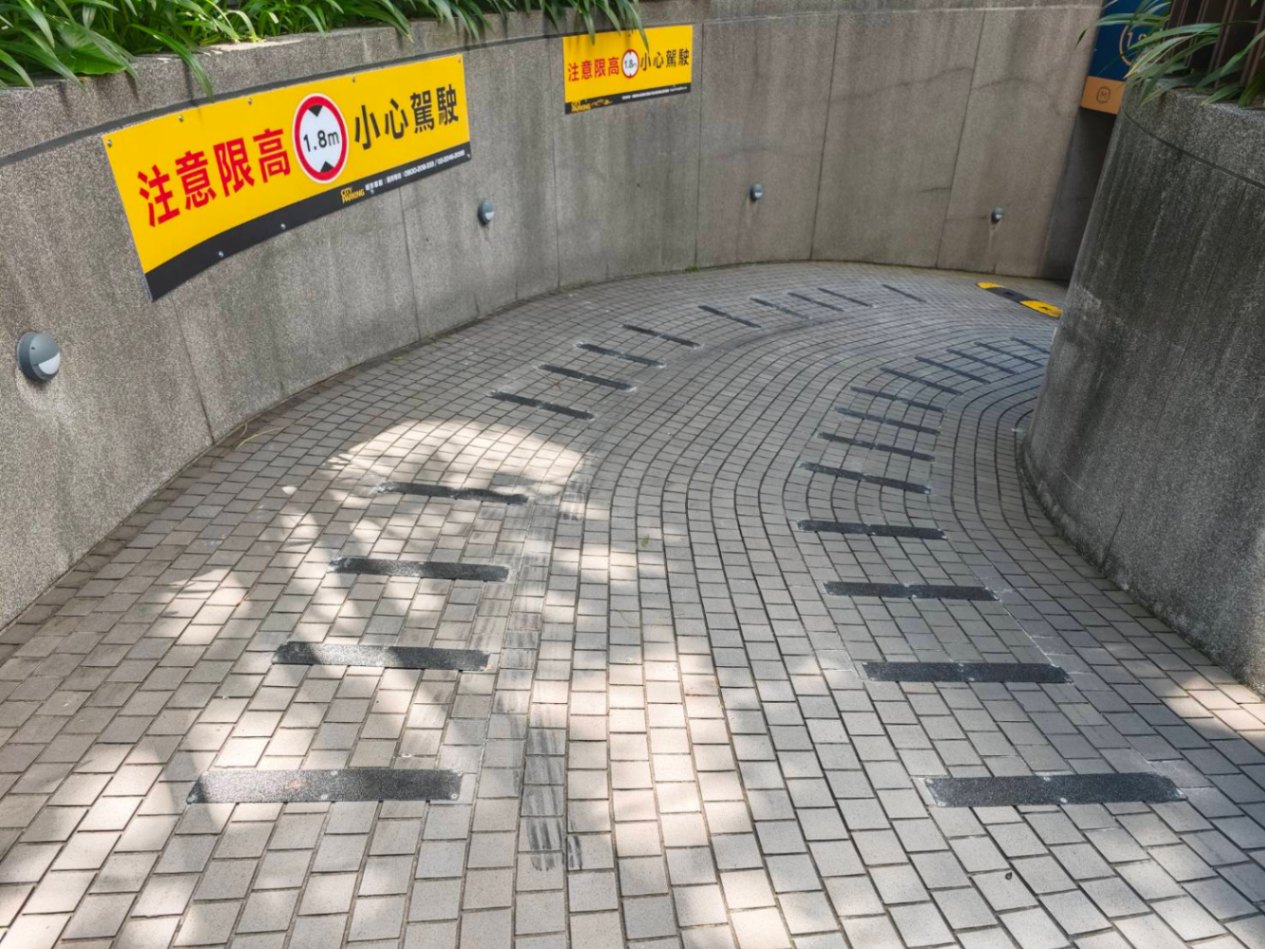
Unlike full-floor flooring installation, plate-type anti-slip products can be configured for specific areas based on site requirements, thus serving as an alternative engineering option for localized anti-slip improvement on existing driveway ramps.
Suitable for: Existing driveways, ramps, or specific high-risk areas requiring improvement projects to locally increase the anti-slip contact surface.
Two. Driveway ramp anti-slip solutions require more than just comparing installation speed.
Driveway projects often face two demands simultaneously:
The first is to shorten the closure time of the driveway ramp.
Secondly, it reduces the impact of subsequent maintenance and re-construction.
Some surface treatment methods can shorten initial construction time, but actual maintenance duration and subsequent upkeep requirements are influenced by the product, substrate, traffic flow, and environment.
Therefore, when selecting materials for driveway anti-slip solutions, it is recommended not to solely inquire:
"How long will it take to complete the installation?"
Further confirmation should be made:
"How is the effect maintained?"
"How often does it require maintenance?"
What to do after wear and tear?
If only a localized area is slippery, is it necessary to perform work on the entire surface?
For existing driveway ramps, if only specific areas require improvement, the scope of localized construction, fixing methods, subsequent maintenance, and re-construction needs should be evaluated together.
III. How to choose anti-slip materials for driveway ramps?
Before selecting materials, it is recommended to confirm the following six items:
1. New or existing driveway ramp?
New installations can involve comprehensive flooring planning, while existing driveway ramps can be assessed for localized improvements or the addition of anti-slip materials.
2. Driveway ramp slope and travel direction
The steeper the slope, the more it is necessary to consider the force conditions when vehicles ascend or descend, brake, and start.
3. Is it a braking or turning area?
Driveway entrances, exits, curves, and deceleration zones require special evaluation of wear resistance and material fixing methods.
4. Is it prone to rain or standing water?
For outdoor driveways and basement entrances, drainage, dampness, and water accumulation conditions should be considered in product selection.
5. How is the material fixed?
For driveway anti-slip solutions, in addition to the surface material itself, the fixing method is equally important. Methods such as adhesive or mechanical fixing should be evaluated based on the substrate and usage conditions.
6. How to maintain it afterwards?
Consider in advance whether materials can be repaired or replaced locally after wear and tear, to avoid having to redo the entire driveway ramp for every repair.
4. What are the treatment options for localized anti-slip treatment on existing driveways?
Not all areas of an existing driveway ramp require the same anti-slip treatment.
For example: downhill braking areas, driveway entrances/exits, turning areas, specific locations on ramps, areas prone to water flow, areas found to be slippery after actual use
If the problem is concentrated in a specific area, compare:
Two engineering methods: full floor treatment and localized anti-slip improvement.
The advantage of localized improvement is that the construction area can be concentrated in the areas that need treatment. For places where driveways cannot be closed for extended periods, the construction area, construction time, and subsequent maintenance methods can also be included in the overall project evaluation.
V. Which driveways are suitable for reinforced silicon carbide stair nosing for driveway ramps?
Wenly has developed Reinforced Silicon Carbide Anti-slip Plates for Driveways for environments like driveways and ramps. This product features a silicon carbide stair tread integrated with a metal substrate to form a plate structure, offering an alternative method for localized slip resistance on driveways. Compared to full floor system renovations, these plate-type anti-slip products can be installed in specific areas according to project requirements. Mechanical fastening methods will be assessed based on existing substrate and installation conditions.
Therefore, if the existing driveway issues are concentrated in specific slopes, braking zones, or other high-risk locations, you can compare localized fixed anti-slip plates with full floor treatments, surface treatments, and other methods.
Actual product selection and installation location should be based on site evaluation of driveway ramp gradient, base material, drainage, vehicle usage, traffic volume, and installation conditions.
6. How to compare different driveway ramp anti-slip methods?
1. Invisible Anti-Slip / Etched Treatment
Construction characteristics: Usually can be completed more quickly, suitable for existing floor improvements where initial construction time needs to be reduced.
Partial installation: Evaluation can be made based on product and site conditions.
Maintenance: Actual service life will be affected by substrate, traffic volume, wear, cleaning, and environment. Some products require regular maintenance.
Applicable scenarios: Projects where the original flooring appearance needs to be maintained, or existing flooring requires quick improvement.
2. Epoxy / Aggregate Type Anti-Slip Flooring
Construction characteristics: Forms an anti-slip surface by combining aggregates such as Silicon Carbide (Carborundum) and quartz sand with a resin system.
Partial Construction: Can be planned according to the construction system, but usually requires processing based on floor construction conditions.
Maintenance Method: Evaluation required based on material system, degree of wear, and environment of use.
Applicable Scenarios: Large-area driveways, ramps, or flooring projects requiring overall treatment.
3. Anti-slip tiles / Anti-slip flooring
Construction Characteristics: Provides anti-slip effect through flooring materials with anti-slip surfaces or textures.
Partial construction: Usually more suitable for newly established, renovated, or areas that can be re-worked.
Maintenance Method: Assessed based on material, seam, and installation method.
Applicable scenarios: New driveway ramp, ramp flooring re-planning or renovation projects.
4. Self-adhesive anti-slip materials
Construction characteristics: Relatively simple installation, can be used in specific localized areas.
Partial Installation: ○ Suitable for localized improvements.
Maintenance Method: Driveway ramps should be specially assessed for adhesion, tire wear, braking, and steering actions.
Applicable scenarios: Stairs, pedestrian areas, and specific localized areas; driveways require on-site condition assessment.
5. Reinforced Silicon Carbide Anti-Slip Plate for Driveway Ramps
Construction Characteristics: Silicon Carbide (Carborundum) stair nosing combined with a metal substrate forms a plank-type anti-slip component, which can be configured according to project requirements.
Partial installation: ○ Can be planned for specific areas.
Maintenance: Partial repairs or replacements can be evaluated based on actual installation methods and usage conditions.
Application Scenarios: Existing driveways, ramps, and projects requiring localized enhanced anti-slip contact surfaces in specific braking zones, turning zones, or other areas.
Seven. Common questions about driveway ramps
Q1: Does a slippery driveway ramp require a complete resurfacing?
A1: Not necessarily. If the problem is concentrated in specific slope sections, braking areas, or turning areas, you can compare different engineering methods such as treating the entire floor surface versus localized anti-slip improvements.
Q2: If invisible anti-slip application is faster, is it always more suitable for driveway ramps?
A2: Not necessarily. Installation speed is only one of the selection criteria; subsequent maintenance, wear, cleaning, performance retention, and reinstallation needs must also be compared.
Q3: Can existing driveways only have partial anti-slip treatment?
A3: It can be assessed. Whether it is suitable for localized construction depends on the driveway ramp slope, substrate, traffic flow, drainage, and the primary slipping locations.
Q4: What is the difference between silicon carbide stair nosing and an anti-slip flooring system?
A4: The construction logic for both is different. Anti-slip flooring is typically handled as an integrated flooring system, whereas plate-type anti-slip products can be installed in specific locations according to project requirements. Therefore, they are suitable for comparing "full surface treatment" versus "localized improvement" as two engineering approaches.
VIII. Conclusion: Driveway anti-slip solutions should be selected based on "usage conditions"
Driveway ramps do not have a single material applicable to all projects.
New or existing driveway ramps, flat surfaces or slopes, indoor or outdoor areas, as well as braking, turning, and wet environments, will all influence the final selection.
Therefore, in addition to comparing anti-slip performance, you should also consider:
Construction closure time → Usage environment → Wear resistance → Fixing method → Maintenance requirements → Local repair method.
If existing driveway ramps only require improvement in specific areas, localized fixed anti-slip products can also be considered as an alternative engineering option to treating the entire floor surface.
Wenly offers solutions for driveway ramps, vehicular ramps, and various anti-slip products. We can assist in evaluating suitable anti-slip solutions based on site photos, substrate, slope, and installation conditions.